

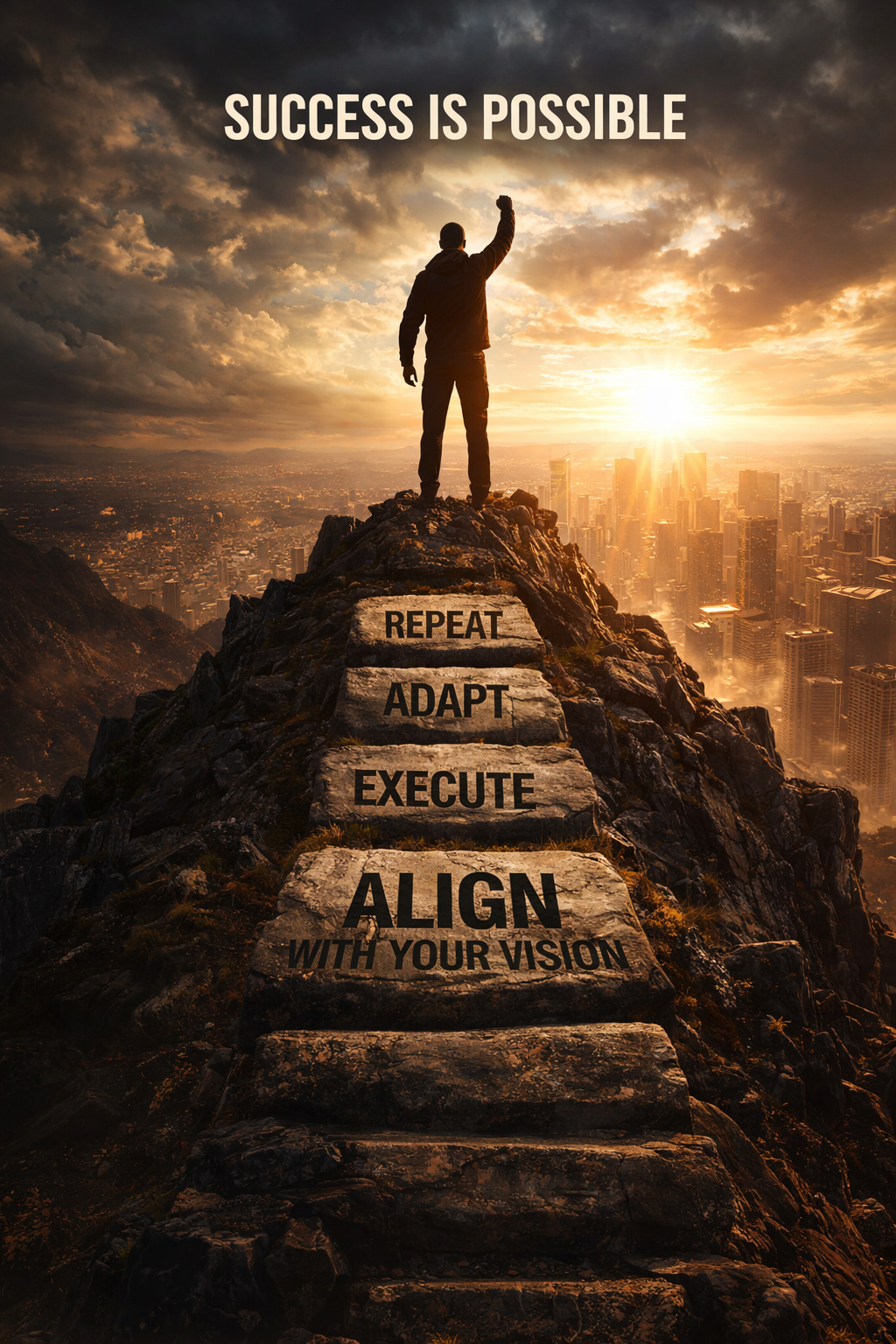
The secret to success isn’t magic—it’s consistency and practicality. Success is like flipping a light switch and expecting it to turn on without checking the power source. It won’t work. Discipline is the electricity—it powers everything. See Success is not possible if discipline is not properly implemented. Without it, there’s no progress, no clarity, no results. You need fuel and structure to see your way forward. Anything that requires hard labor also requires sacrifices. So the real question is: What does success mean to you?
What Is Success?
Success is getting the results you want in a way that aligns with who you are—doing it repeatedly.
As Ralph Waldo Emerson said, “Success is to be yourself in a world that is constantly trying to make you something else.” We’ve all felt that pressure—to follow norms, to fit expectations. But real success is personal. It’s not just achievement—it’s alignment. For some, success is a major milestone. For others, it’s a small daily win. Both matter. At its core, success is: Achieving a goal (short-term or long-term)Solving a problem with intention, and following through with conviction. Success is not accidental—it is built.
What Is the 3Ps Framework?
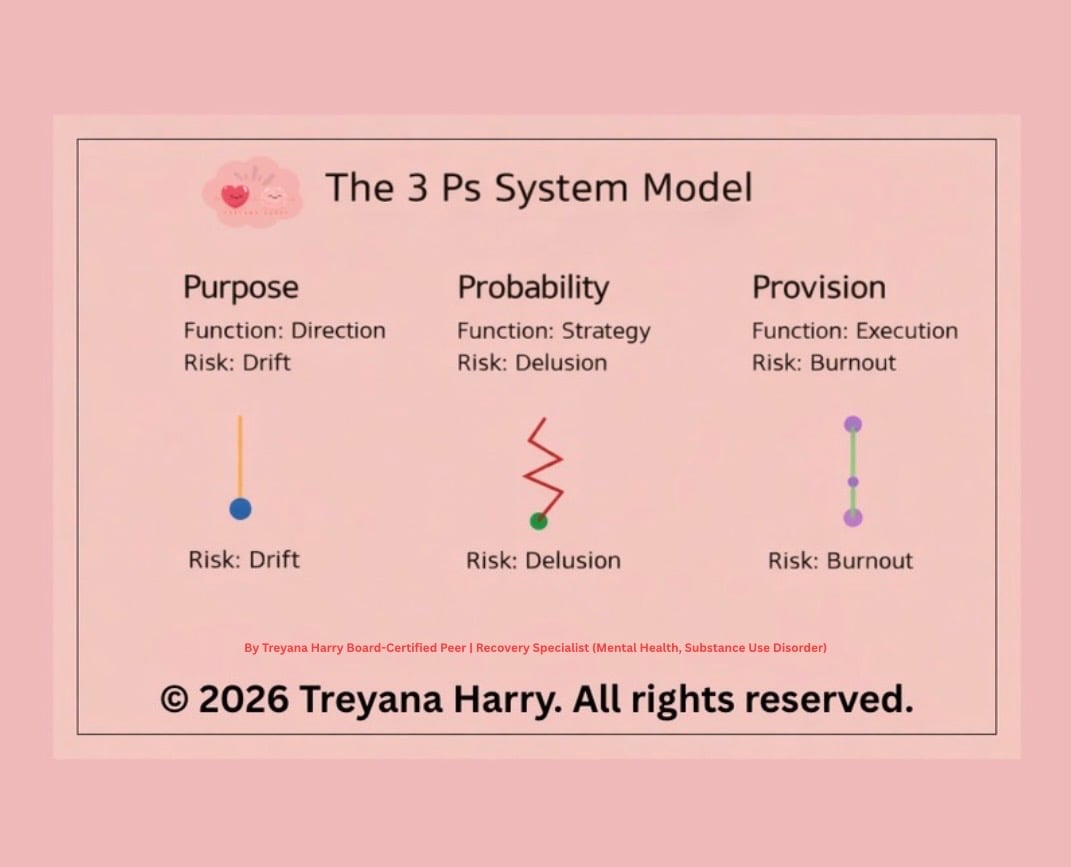
The 3Ps Framework is a decision- making and execution system designed to help you consistently achieve goals through Clarity (Purpose), Strategy (Probability), and Readiness (Provision). Most frameworks focus on motivation. This one focuses on structure—what actually produces results.
How to Use It to Achieve Anything?
1. Purpose — Direction Before Motion
Define the exact outcome you want. Be precise.
Ask yourself:
- What am I optimizing for?
- Does this align with who I’m becoming?
Purpose filters noise. It eliminates distractions and low-value activities.
Clarity precedes velocity. Clarity drives effective action.
2. Probability — Play Favorable Odds
This is where you shift from hope to strategy.
Break your goal into controllable variables:
- Skill acquisition
- Market demand
- Timing
- Network proximity
Instead of asking “Can I do this?”, ask:
“What increases my chances of success?”
High performers don’t rely on motivation—they engineer probability.
3. Provision — Resource Readiness
Execution requires structure.
Ask yourself:
- Do I have the time?
- Do I have the energy?
- Do I have the resources and resilience?
If not, build them first.
Keep in mind, preparation is not delay—it’s acceleration. It’s only a delay if you’re not moving.
The Integrated Model:
- Purpose → Direction (avoids drift)
- Probability → Strategy (avoids delusion)
- Provision → Execution (avoids burnout)
When all three align, consistent action becomes inevitable—and success becomes repeatable.
A Simple Application Flow to follow:
- Define your outcome (Purpose)
- Identify what increases success odds (Probability)
- Secure resources and capacity (Provision)
- Execute, measure, and adjust
Can You Use This in Your Situation?
Yes. This framework is universal.
It works for short and long-term goals:
- Careers
- Business
- Fitness
- Finances
- Relationships
- Creative enterprises
It scales from small daily habits to long-term ambitions.
How Do You Know You’re Doing It Right?
Run this quick check:
- Am I clear? (Purpose)
- Am I realistic? (Probability)
- Am I prepared? (Provision)
If one is missing, results will suffer.
What Happens When the System Fails?
Don’t quit—diagnose.
When the system fails, the outcome is not random—it reflects a breakdown in one (or more) of the core elements: Purpose, Probability, or Provision.
Ask:
- Is my goal clearly defined? (Purpose)
- Am I playing favorable odds? (Probability)
- Am I equipped to sustain this? (Provision)
Then investigate:
1. If Purpose fails → Drift
You lose direction. Effort becomes scattered, decisions lack clarity, and progress feels inconsistent. You may stay busy, but you are not moving forward.
2. If Probability fails → Delusion
You rely on hope instead of strategy. The goal may be clear, but the approach is flawed. Ignoring reality—skills, timing, demand—leads to repeated failure despite effort.
3. If Provision fails → Burnout
You try to execute without the necessary resources. The time, energy, money, or resilience runs out. Even strong goals and strategies collapse under pressure.
It is essential to understand that it is rarely about lack of effort—it is usually a structural issue.
Is either you lack direction or focus? Lack of direction leads to wasted motion. No strategy leads to wasted effort. No resources lead to unsustainable action.
Failure is rarely about effort—it’s about structure.
- No direction → wasted motion
- No strategy → wasted effort
- No resources → unsustainable action
Same concept, just different approach. It just takes consideration and patience when applying the information. Failure isn’t random—it’s structural. When something isn’t working, things need to be adjusted. It doesn’t mean the idea is stupid or doesn’t have meaning.
Fix the weak link, and the system starts working again.
Final Thought
When you stop relying on guesswork and start applying structure, everything changes. If you can achieve the same or better results—with clarity, strategy, and sustainability—that is success. That’s not luck. That’s engineered success.
Ready to apply the 3Ps of Success System Model to your own goals?
Get Level 1 — Basic Fundamentals of The 3 Ps Success System worksheet for just $3 or upgrade to The Full 3Ps Success System Experience for $40.
Link below.
MindWell Collective Main Page
Summary:
Success is getting what you want, in a way that fits who you are—and being able to keep doing it. Success isn’t luck—it’s something you build.
The 3Ps framework helps you do that:
- Purpose → know what you want
- Probability → choose the best way to get it
- Provision → make sure you’re ready to follow through
If one is missing:
- No purpose → you feel lost
- No strategy → you waste effort
- No preparation → you burn out
When all three work together, things become clear and easier.
Look at my results when I first applied these concepts to my own personal work goal.
It’s really not magic. It’s practicality, passion, and patience.
Stay Connected
Don’t forget to subscribe for more insights and practical advice on mindfulness. Share your thoughts in the comments below. Which step mostly calls your attention?
Comments ()